
Mental Health and Resilience Strategies for the Insolvency Practitioners
When was the last time you finished work and actually felt like you were done? For many insolvency practitioners, the day doesn’t end when the office lights go out. The mind keeps working, replaying client worries and deadlines.

Insolvency work demands more than technical accuracy; it asks for emotional strength every single day. When your clients are under financial distress, their pressure becomes yours. You must listen, guide, and carry their uncertainty while maintaining your own calm.
Let’s say you walk into the office with a packed schedule. One client is anxious about liquidation. Another has just lost their business and wants immediate answers. Meanwhile, your phone doesn’t stop ringing — and by the end of the day, even after resolving major cases, your mind is still replaying client conversations.
If you believe this constant load is part of the job, you need to reconsider, as it strains your mental health and erodes motivation, clarity, and focus. This blog sheds light on that pressure and explores how to manage it before it develops into burnout.
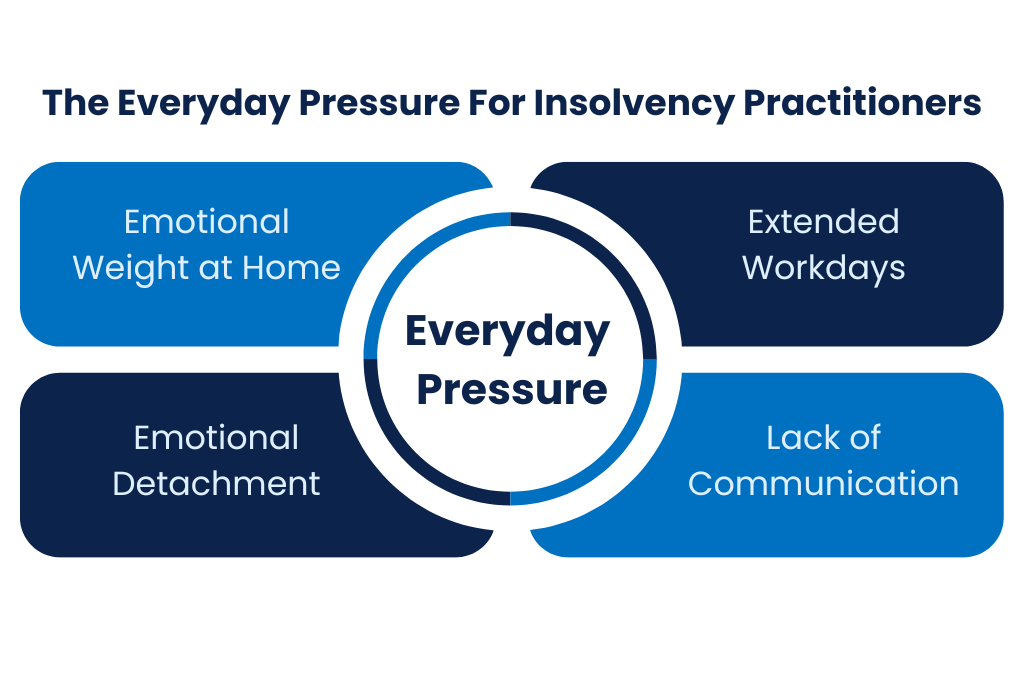
The Everyday Pressure Insolvency Practitioners Rarely Talk About
Emotional Weight That Follows Home
You finish a meeting with a director on the brink of liquidation and go over their liquidation report and pending financial statements. However, their concerns stay in your mind. During dinner, you replay conversations about creditor obligations or cash flow gaps.
On the commute the next morning, your focus returns to emails about overdue filings or client queries. This mental load reduces clarity for new cases and increases the risk of errors in financial assessments.
Extended Workdays and the Illusion of Control
Insolvency practitioners often take client calls in the evening, finalise reports, and review case files at night. While this keeps the deadlines on track, it signals to your clients and team that they can rely on you for last-minute fixes instead of improving their workflows.
Over time, these long hours drain your energy and increase the chance of mistakes in creditor communications and case summaries.
Emotional Detachment That Dulls Judgment
Detachment can help protect your focus during high-pressure cases. But repeated exposure to distressed clients eventually dulls your reactions. Your email may start sounding sharper, and you may lose patience during client discussions.
For an IP, this is a warning that the emotional load has reached its limit and requires conscious management.
Silence That Allows Errors To Grow
In the team, long hours and heavy workloads are often accepted without discussion. Nobody raises concerns about fatigue or workload pressure, so mistakes go unnoticed.
Strategies to Rebuild Balance and Stay Sharp Under Pressure
Close each case mentally and on paper
After completing a high-pressure meeting or finalising a report, spend five minutes documenting what is done and what remains pending. Physically check off completed tasks in your case files and update financial assessments.
Take a moment to step back, breathe, and mentally mark the case as complete. This prevents stress from carrying over to the next client or report and reduces errors.
Protect Your Energy by Structuring the Day
Structure your day around your energy levels, rather than just the time spent at your desk. Plan two 90-minute sessions for high-value tasks such as creditor negotiation or financial statement review. After each session, take a 10-minute break.
Avoid taking last-minute calls or team tasks; follow your schedule. Align a few low-intensity tasks, such as updating clients or checking emails, to keep your mind relaxed. This approach keeps your judgment sharp and reduces errors.
Convert Ad Hoc Empathy Into Routine Peer Maintenance
Peer discussions should be a regular part of the process. Set up a brief weekly check-in with your team or fellow IPs to discuss ongoing cases and identify areas of pressure.
Discuss your experiences and encourage your team to share the problems they are facing. These small steps prevent isolation and allow everyone to release stress before it leads to burnout.
Treat Recovery as a Professional Skill
Recovery is a professional skill. Schedule at least three lunches away from screens, take one ten-minute walk outside every day, and plan two evenings each week where you leave on time without checking work.
Log these activities in a short weekly wellbeing note and share one takeaway with the team. It reduces reactivity and provides mental reserves to make complex judgments with greater confidence.
Wrapping Up
Insolvency work is not just about closing balance sheets or reconciling client accounts. It is about managing the human side behind every number. Each case carries a story of financial loss, negotiation, and recovery, and you stand at the centre of it all. Over time, that emotional weight seeps into your judgment and clouds the accuracy that your work demands.
You do not have to carry that pressure without pause. These strategies restore clarity and help you return to your next client with focus and patience.
Start your free trial today of the Receipt Bot PDF bank statement converter.